
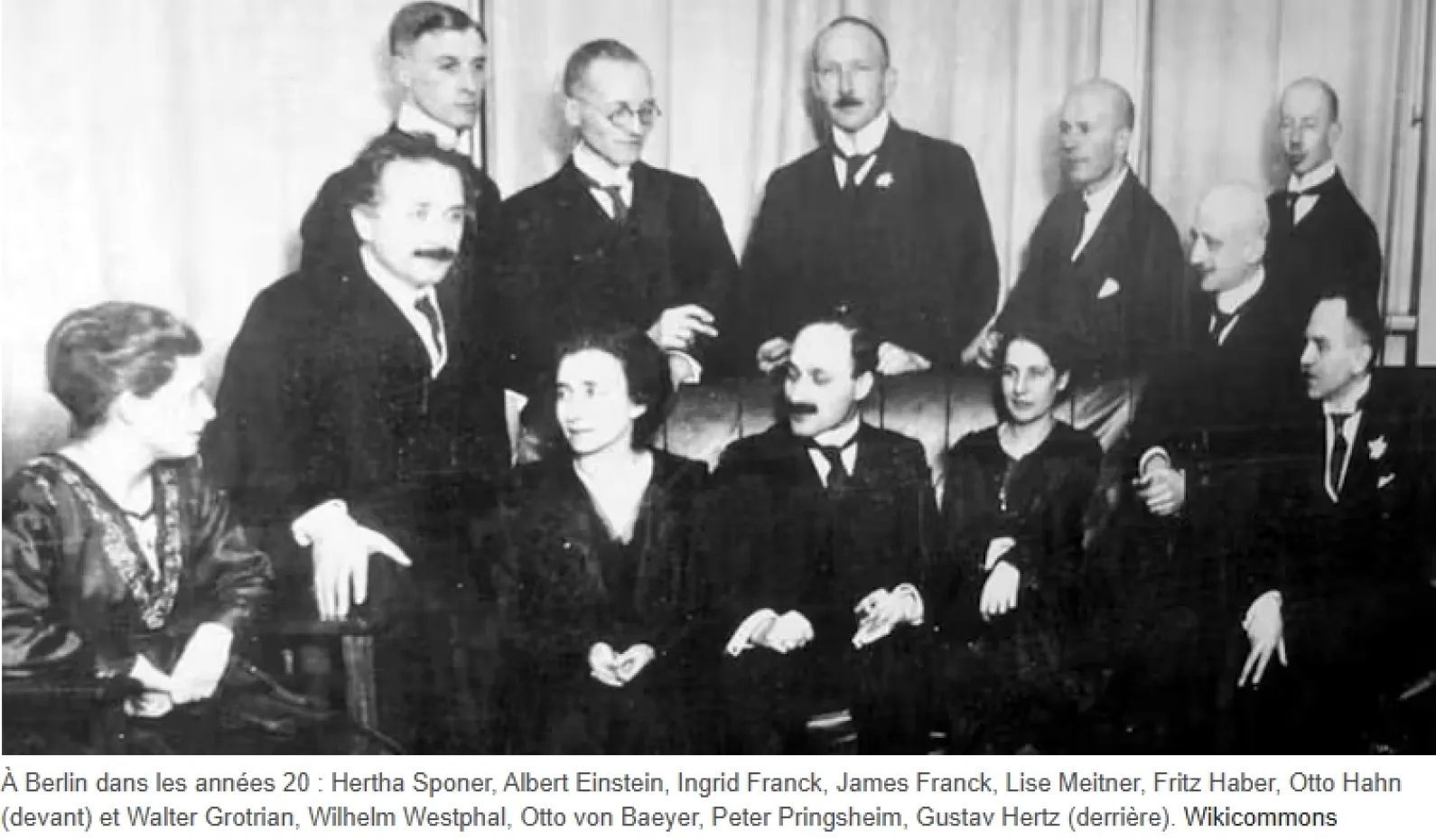
Lise Meitner, the light of science who remained in the shadows of history.
Throughout the history of science, many women have been forgotten over the years, and Lise Meitner is one of them. An Austrian physicist born in 1878 in Vienna, she was among the first women to earn a doctorate in physics at the university, which was a remarkable achievement at a time when women were not welcomed in laboratories.
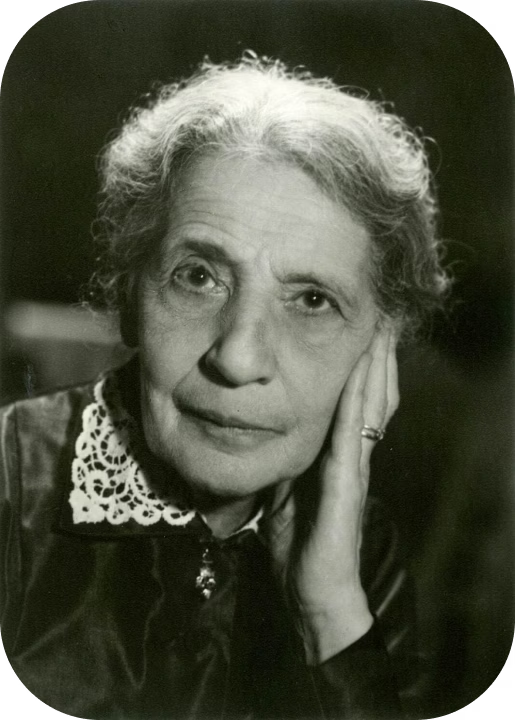
Her journey began in Berlin, where she worked alongside the chemist Otto Hahn. Lise brought theoretical rigor while Hahn conducted the experiments, forming a duo destined for success. However, when the world went to war and anti-Jewish laws forced Meitner into exile in Sweden, everything changed.
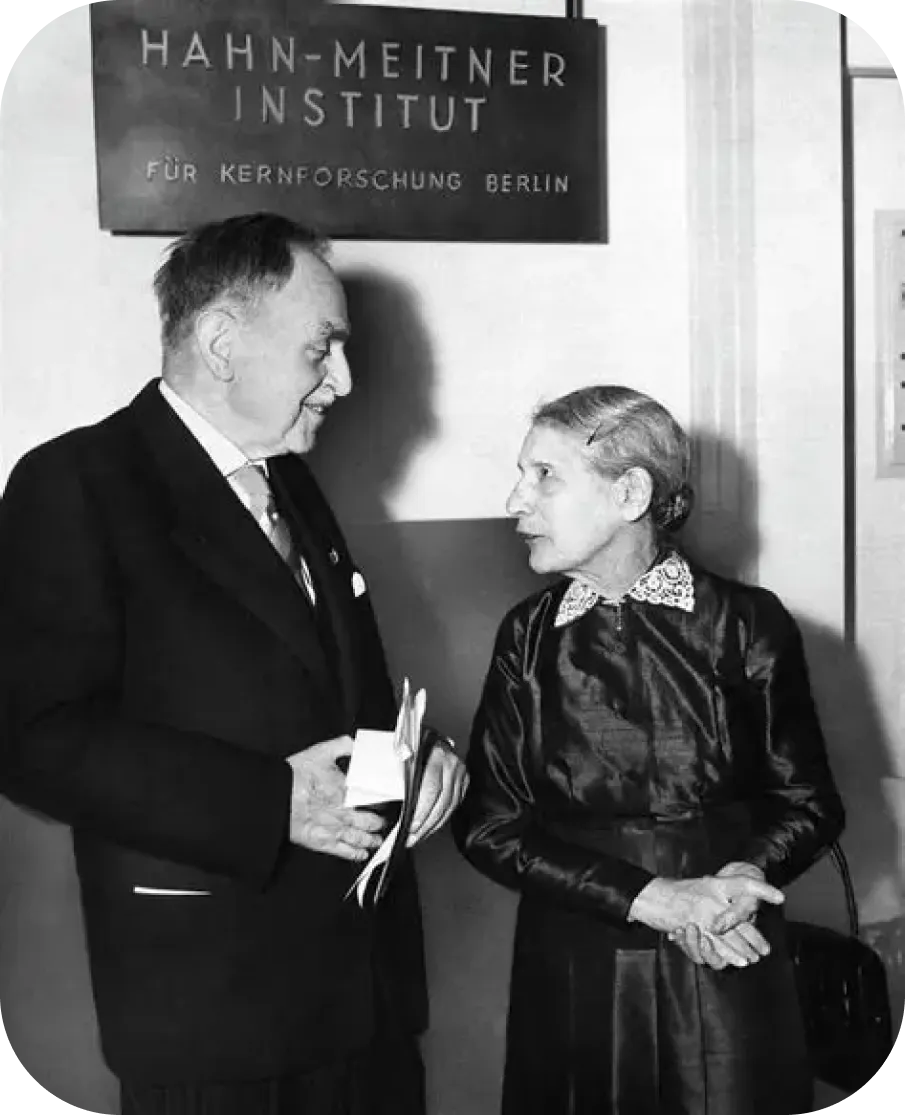
It was in 1938 that Meitner, analyzing the experimental results sent by Hahn and Strassmann, understood what no one had yet realized: the uranium atom had split in two. Nuclear fission3 had been discovered.
But the scientific triumph quickly turned to injustice.
In 1944, the Nobel Prize in Chemistry was awarded to Otto Hahn, with Lise Meitner being one of those who provided the physical interpretation of the phenomenon, was completely ignored. Later, she stated, "I do not want to be associated with the bomb," refusing to be part of the Manhattan Project. Yet, witnessing too much horror during the war, her fission was meant to be a step forward in knowledge, not a weapon of destruction.
“Science makes one humble in the face of the vastness of what remains to be understood.”
— Lise Meitner
Until her death in 1968, Lise Meitner remained a figure of integrity, dedication, and scientific courage.
In 1997, element 109 on the periodic table was named Meitnerium (Mt) in her honor. A recognition, admittedly late, but symbolic.